There’s something particularly frustrating about cleaning a bathroom only to find chalky white marks appearing again a few days later. The kitchen faucet develops the same stubborn residue, drinking glasses look cloudy, and the kettle needs another round of descaling. These familiar problems often share a common cause: hard water. For homeowners considering water softeners…
There’s something particularly frustrating about cleaning a bathroom only to find chalky white marks appearing again a few days later. The kitchen faucet develops the same stubborn residue, drinking glasses look cloudy, and the kettle needs another round of descaling. These familiar problems often share a common cause: hard water.
For homeowners considering water softeners for mineral buildup, reducing excessive hardness at its source can be considerably more practical than constantly removing deposits after they appear.
Across Cedar Rapids and Eastern Iowa, households can experience different water conditions depending on their supply. Understanding those conditions and choosing suitable treatment equipment can make home maintenance easier while bringing greater comfort to everyday routines.
Why Mineral Deposits Keep Coming Back
Hard water contains dissolved minerals, primarily calcium and magnesium. As water evaporates, these minerals may remain behind, creating the chalky residue commonly found around sinks, showerheads, and bathroom fixtures.
Heating water can also encourage scale formation. That’s why mineral buildup frequently becomes noticeable inside kettles and water-heating appliances.
The occasional application of vinegar or a suitable descaling product might help remove existing deposits, but it doesn’t change the incoming water supply.
It’s rather like dealing with a recurring problem without addressing its cause.
If excessive hardness is responsible for your household frustrations, treating the water before it reaches connected fixtures may provide a more lasting improvement.
Getting Your Water Softener Installed Properly
Purchasing treatment equipment is one thing. Making sure it works effectively within your household plumbing is another matter entirely.
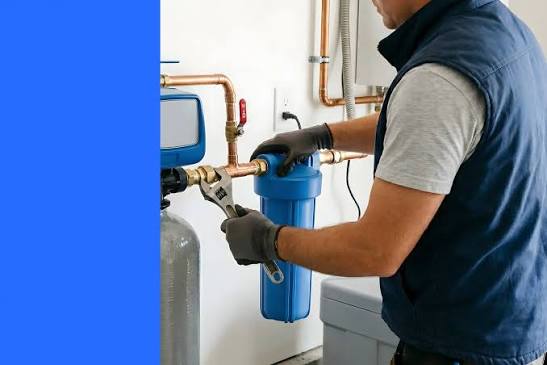
Reliable water softener installation and service can help homeowners establish appropriate plumbing connections, configure regeneration settings, and maintain consistent treatment performance.
A properly planned installation should consider measured hardness levels, household consumption, incoming water pressure, and available space.
There’s also the question of accessibility. You don’t want to rearrange half your basement whenever the brine tank needs salt.
When consulting a provider such as Waterhouse Water Systems, ask about installation arrangements, ongoing maintenance costs, and servicing requirements.
Understanding how your equipment operates from the beginning can prevent unnecessary confusion later, particularly when something doesn’t seem to be working as expected.
Finding the Right Balance Between Treatment and Convenience
Every household has different water requirements. Some families run the washing machine almost daily, while others consume relatively modest amounts of water.
A thoughtful approach to residential water conditioning takes these differences into account alongside water chemistry and specific treatment priorities.
Conventional ion-exchange softeners reduce calcium and magnesium by exchanging them for sodium or, in compatible systems, potassium ions.
The equipment periodically regenerates to restore its treatment capacity.
Demand-initiated models monitor water usage and regenerate according to programmed settings, potentially helping reduce unnecessary salt and water consumption.
The most suitable arrangement isn’t necessarily the one with the greatest number of features. It’s the one that addresses your household’s actual concerns without making everyday life more complicated.
Giving Your Household Appliances a Fighting Chance
Most homeowners barely think about their water heater until something goes wrong. Unfortunately, replacing one can be an expensive surprise.
Hardness minerals may gradually accumulate inside water-heating equipment, potentially interfering with heat transfer and contributing to maintenance requirements.
Dishwashers, washing machines, and other appliances can also experience hardness-related problems.
Appropriate softening helps limit new mineral scale formation. While it cannot automatically repair existing damage, it can complement a sensible preventive maintenance routine.
If you’re investing in new household appliances, assessing your water hardness beforehand is worth considering.
After all, protecting equipment you’ve already paid for makes considerably more sense than dealing with avoidable maintenance expenses down the road.
The Difference Softer Water Can Make on Laundry Day
Pulling a load of freshly washed towels from the dryer should be a pleasant experience. But when those towels feel stiff and rough, it’s natural to wonder whether your detergent is doing its job.
Hardness minerals can interfere with the performance of certain cleaning products.
With softened water, soap may lather more readily, and laundry detergents can perform differently. Homeowners may need to adjust detergent quantities according to product recommendations.
Bathroom cleaning may become easier, too, as fewer new hardness-related deposits accumulate.
Of course, individual results depend on water conditions, equipment performance, and cleaning habits.
Still, making routine household chores a little less demanding is something most busy families can appreciate.
Recognizing When Your Water Softener Needs Attention
Once your softener is installed, it’s easy to forget about it. Most systems operate quietly, often tucked away in a basement or utility room.
However, regular attention remains important.
Check regenerating salt levels according to manufacturer recommendations and pay attention to unexpected changes in water hardness.
A sudden return of mineral deposits could indicate depleted salt, incorrect programming, or another equipment issue requiring investigation.
Periodic hardness testing can help verify that the system continues working as intended.
Remember that softening isn’t the same as comprehensive drinking water purification. If additional water quality concerns exist, separate filtration or specialized treatment may be appropriate.
Making Softer Water a Lasting Household Improvement
For families throughout Cedar Rapids and Eastern Iowa, managing hard water doesn’t have to involve endless scrubbing or repeated appliance descaling.
Reliable testing, appropriately selected equipment, proper installation, and consistent servicing can help address excessive hardness more effectively.
The rewards often appear in ordinary moments — washing your favorite clothes, enjoying a shower, or noticing that the kitchen faucet stays cleaner for longer.
Your weekends are valuable. Spending them with family, enjoying a hobby, or simply relaxing sounds much better than repeatedly tackling stubborn mineral deposits.
Sometimes, improving the water flowing through your home is a practical way to reclaim a little of that time while making everyday living more comfortable.